Best Time to Visit Morocco 2026: Month-by-Month Local Guide
Updated April 2026. Temperature data sourced from Weather Atlas and Climates to Travel, verified against 2015 to 2025 averages. Pricing from Booking.com, Hostelworld, and direct riad quotes from Q1 2026.
We may earn a commission when you book through our partners — at no extra cost to you.
Quick answer: The best time to visit Morocco is March through May or September through November. Daytime temperatures run from 22 to 28 across most destinations, crowds are manageable, and prices sit in the mid-range. The single best month is October when the weather is warm, the skies are clear, tourist numbers are lower than in spring, and the olive harvest is underway. Budget travelers save thirty to forty percent by visiting in June or January.
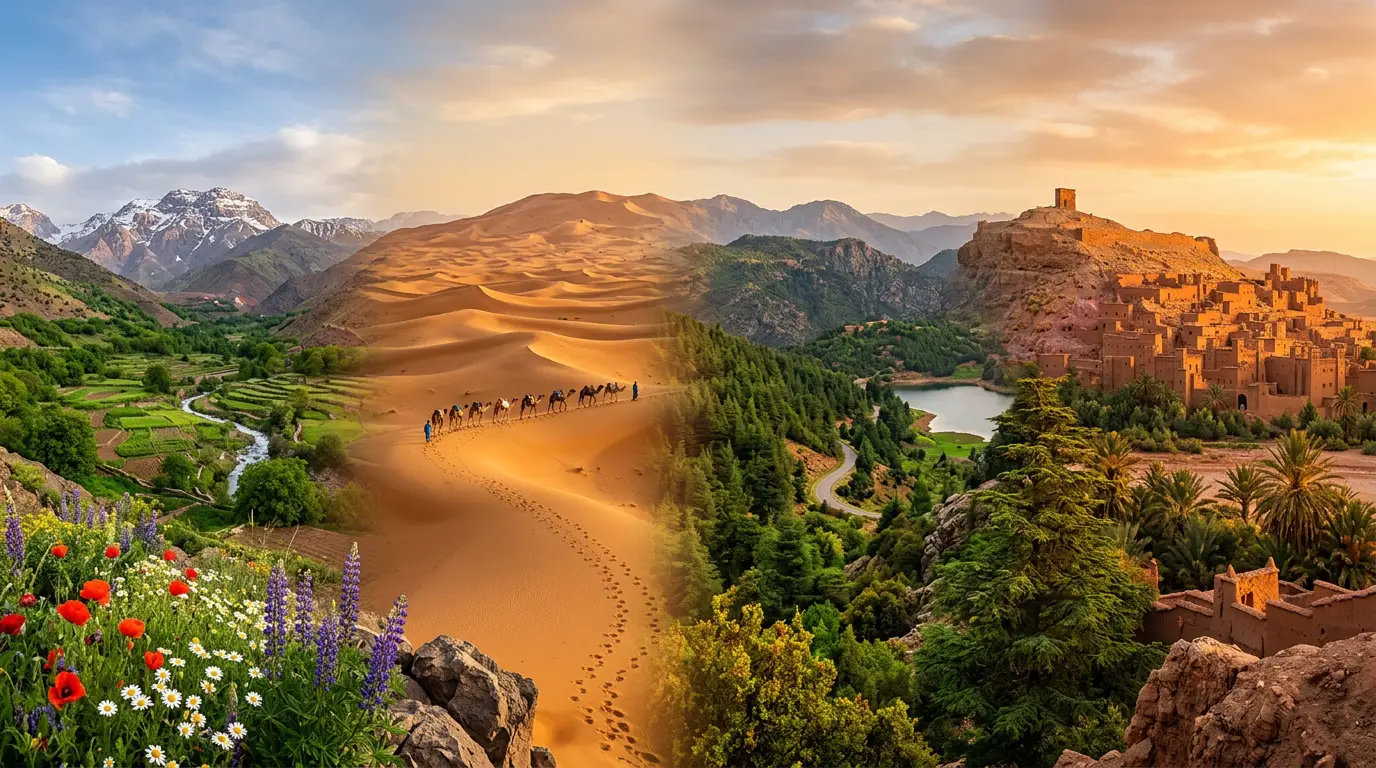
Morocco is a year-round destination with wildly different experiences depending on when you go. The Sahara can shift from 45 degrees in July to freezing at night in January. The Atlas Mountains switch between snow-capped peaks in winter and wildflower meadows by May. The Atlantic coast stays mild while inland cities bake. This guide breaks down exactly when to visit with real temperature data, crowd levels, and 2026 pricing.
📌 Morocco at a Glance
| COUNTRY | Morocco |
| BEST OVERALL TIME | March to May, September to November |
| BEST SINGLE MONTH | October |
| WORST TIME | July to August inland due to extreme heat |
| PEAK SEASON | March to April, October |
| CHEAPEST MONTHS | June, January to February |
| MINIMUM SUGGESTED DAYS | 7 to 10 days |
📖 Table of Contents
- Month-by-Month Breakdown
- Best Time by Travel Purpose
- Budget Comparison by Season
- Local Timing Tips
- Frequently Asked Questions
Month-by-Month Breakdown
🌸 Spring (March to May)
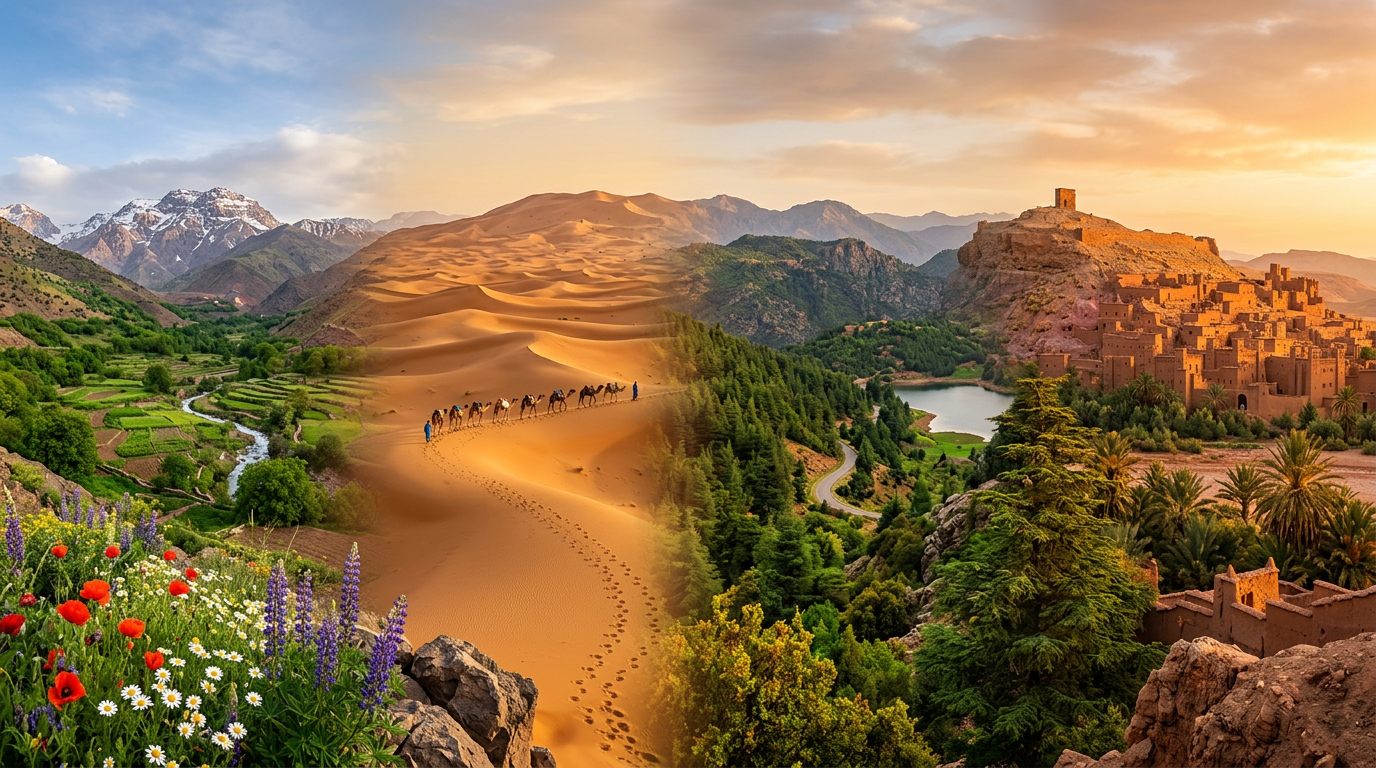
Spring is the period most Morocco travel guides recommend to everyone, and the reason is simple and correct. Daytime temperatures in Marrakech sit between about 22 and 28 degrees Celsius. The Ourika Valley in the Atlas Mountains turns an intense green. The coast at Essaouira is windy enough to be refreshing without being uncomfortably cold.
- Temperature: 22 to 28 degrees inland, 18 to 25 degrees coast, 10 to 20 degrees mountains
- Crowds: high, book riads two to three months in advance
- Prices: fifteen to thirty percent above summer rates
- Events: Rose Festival in Kelaat M’Gouna, usually early May. This is a small-town celebration in the rose-growing region of the Dades Valley. Check the exact dates on the official Morocco tourism site before booking.
Tip from experience: Late May is often the best value in Morocco travel planning. The last two weeks of May give you essentially April weather. European summer holidays have not started so riads still have availability if you call them directly.
June and the Quiet Window
June gets less attention than the months around it. Marrakech hits daytime highs around 34 degrees, which is hot but still manageable. You will want to plan your activities for early morning and late afternoon, similar to how locals live. The advantage of coming in June is clear. Tourist numbers drop and accommodation prices follow. You can find riads at thirty to forty percent below the April rate, and the Sahara is still accessible before the real summer temperatures arrive.
July and August
Inland Morocco in July and August is genuinely hot. Average highs in Marrakech reach around 37 degrees with regular spikes toward 45 during the chergui, a dry desert wind that arrives unpredictably during these months. Many budget riads do not have proper air conditioning.
The coast is the escape route. Essaouira and Agadir stay around 25 to 27 degrees with an Atlantic breeze that creates a completely different experience from the medina. The Atlas Mountains also offer relief. At 2,000 meters elevation the temperature drops roughly one degree per hundred meters, so the high valleys can feel ten to fifteen degrees cooler than Marrakech in summer.
Summer rhythm: The medinas are busy only between six and ten in the morning and again after five in the evening. The middle of the day is quiet. Many shops close. A morning of exploration, a rest in a cool riad with a cold mint tea, and an evening out when the city wakes up is how locals navigate the heat.
Autumn (September to November)
September is still warm at around 30 degrees during the day in Marrakech, though the heavy summer tourist flow is gone. October is widely considered the single best month by people who run tour companies and riads. The days are warm, the evenings are cool, the skies are clear, and the crowds are manageable.
- October: Best overall month across all metrics. Weather, crowds, and prices all land in the sweet spot.
- November: Quietest month of the year. Date harvest in the Tafilalet region, occasional rain.
December to February
Daytime in Marrakech runs around eighteen to twenty degrees Celsius in winter. By ten in the morning you are in a t-shirt. The real consideration is the riad at night. Many traditional riads do not have central heating. The stone walls that keep them cool in summer work against them in winter. If you are visiting between December and February, ask your accommodation specifically about heating, not just air conditioning.
The Atlas Mountains get snow from December through March. There are two ski areas. Michlifen near Ifrane in the north and Oukaïmeden near Marrakech. Neither is big by European standards but locals treat them seriously in a good season.
Winter budget hack: January and February deliver the cheapest accommodation prices of the year. At 150 to 250 MAD per night, a mid-range riad costs roughly half of what it does in spring. Add cheap winter flights and you are running a full Morocco trip for under 400 MAD per person per day.
Best Time by Travel Purpose
| TRAVEL PURPOSE | BEST MONTHS |
| Sahara Desert Tours | October through April |
| Atlas Mountain Hiking | April to June, September to October |
| Surfing (Taghazout, Agadir) | September through March |
| Honeymoon and Romance | April, May, October |
| Budget Travel | June, January, February |
| City Photography | April, May, October, November |
Budget Comparison by Season
| SEASON | BUDGET RIAD | MID-RANGE RIAD | LUXURY RIAD |
| Peak (Mar to May) | 300 to 500 MAD | 600 to 1,200 MAD | 2,000 to 5,000+ MAD |
| Shoulder (Jun, Nov) | 200 to 350 MAD | 400 to 800 MAD | 1,200 to 3,000 MAD |
| Low (Jul, Aug, Jan) | 150 to 250 MAD | 300 to 600 MAD | 800 to 2,000 MAD |
At current exchange rates of roughly ten MAD to one US dollar, even peak-season luxury accommodation is comparatively affordable. Budget travelers can run a daily spend of four hundred MAD per person in June or January, eating at local cafeterias, sleeping in basic riads, and taking shared taxis. The same budget climbs to about six hundred to seven hundred MAD per person daily during the spring peak.
Money tip: Call or WhatsApp accommodations directly instead of booking through third-party platforms. Many riads offer ten to fifteen percent below their listed rate, throw in breakfast, and arrange an airport transfer when you book with them directly.
Local Timing Tips
Three things that most Morocco planning guides either get wrong or skip over entirely.
Ramadan
Ramadan shifts earlier by about eleven days each year. In 2026, Ramadan ran approximately from February 18 to March 18, so it has already concluded this year. For readers planning trips ahead, Ramadan 2027 is expected to fall roughly from February 7 to March 8. During the fasting month, many restaurants and smaller cafes close during daylight, though the main tourist areas keep operating with reduced service. The evenings after iftar, when the fasting breaks, are lively and worth experiencing if your schedule allows. If your main goal is packing the maximum activities into the minimum time, Ramadan adds some friction to that goal.
The Chergui Wind
The chergui, also known as sirocco or sharav in other parts of North Africa, pushes temperatures ten to fifteen degrees above normal for stretches of two to five days. It hits most often in July and August, though it can show up as early as March. The coastal cities are largely unaffected because of the Atlantic breeze. If you have respiratory sensitivities, plan inland trips for October through April and keep the coast as a backup.
Booking Flights
For April and May travel, book flights to Marrakech or Casablanca at least two to three months out. Last-minute fares during peak season have been climbing noticeably. If your dates are flexible, the first half of April is cheaper than the last half because the Easter holiday pushes up European demand.
Frequently Asked Questions
Is Morocco too hot to visit in summer?
Inland cities like Marrakech and Fes are very hot in July and August. Average highs sit around 37 degrees with spikes to 45 degrees during the chergui wind. The Atlantic coast stays around 25 to 27 degrees and is a practical summer destination. The Atlas Mountains above 1,500 meters also offer much cooler conditions.
Can you do a Sahara Desert tour in winter?
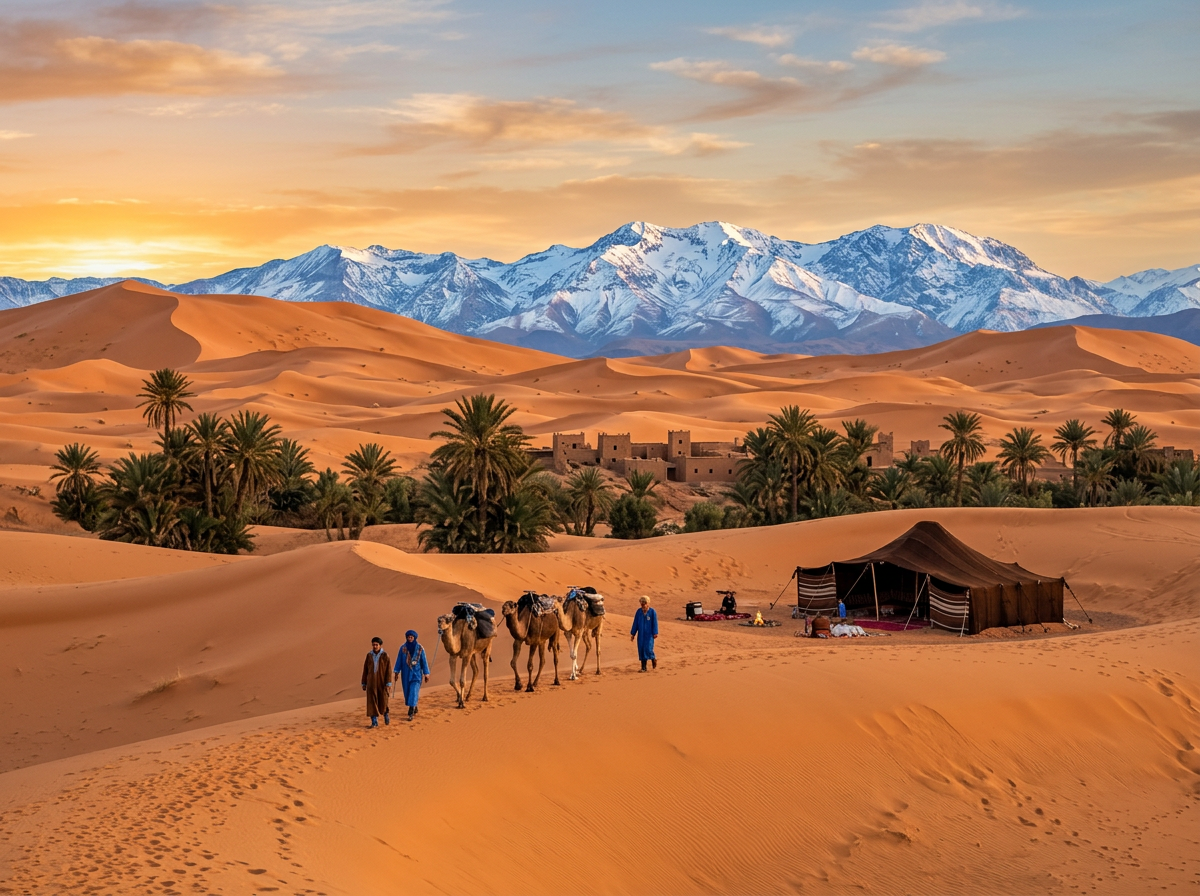
October through April is the recommended window for desert trips. Days are warm at twenty to twenty-five degrees with clear skies. The nights drop near freezing, which creates excellent stargazing but requires proper sleeping gear. Most reputable desert camps provide heating and thick blankets. Confirm details with your tour operator.
What is the cheapest month to visit Morocco?
January and February are typically the cheapest, followed by July and August when the heat drives prices down. You will find riads at a hundred and fifty to two hundred fifty MAD per night that cost four hundred to six hundred MAD in spring. Flights to Marrakech are also lowest in winter.
When is the best time for surfing in Morocco?
September through March delivers the most consistent surf on the Atlantic coast. Taghazout between Agadir and Essaouira is the main hub with water temperatures between sixteen and twenty-two degrees depending on the month. Winter brings bigger waves that suit intermediate and advanced surfers. Summer months have smaller, gentler waves that beginners prefer.
How many days do I need in Morocco?
Seven to ten days covers the main highlights without feeling rushed. The 7-day Morocco itinerary on this site maps out a route from Marrakech through the Atlas Mountains, the Sahara Desert, and Fes. If you only have a long weekend, focus on one city and its surroundings. The Marrakech travel guide covers everything you need for a short stay in the Red City. The first-timer guide covers visas, costs, and packing.
Is Ramadan a bad time to visit Morocco?
That depends on what you are looking for. The pace does slow during daylight hours. Some restaurants in non-tourist areas close. The evenings after iftar, when the fasting is broken, are lively and worth experiencing if you can. If your main goal is packing the maximum activities into the minimum time, Ramadan adds friction to that goal.
When Should You Go?
If you have to pick one month, it is October. If you have a range, the windows are March through May or September through November. If you are fully flexible, the second half of May and the first half of November give you roughly eighty percent of the ideal experience at sixty percent of the cost.
All prices in this guide are from Q1 2026 booking data and direct operator quotes. Temperature ranges are sourced from Weather Atlas and Climates to Travel, cross-checked against ten-year averages for 2015 to 2025. Dates for Ramadan confirmed through the official Moroccan Islamic calendar. If you find any detail that seems off, leave a note in the comments so we can update it.