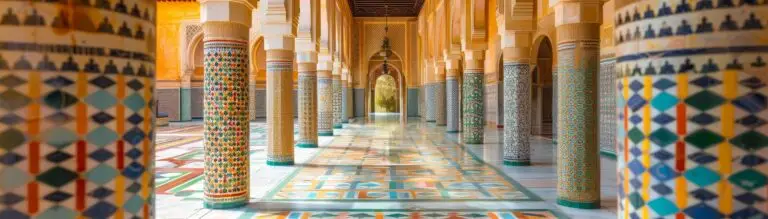
Morocco Travel Guide for First Timers (2026): Complete Insider Guide
Morocco Travel Guide for First Timers (2026): Complete Insider Guide
Planning your first trip to Morocco? This comprehensive Morocco travel guide for first timers covers everything you need to know — from visas and best times to visit, to what to pack, where to go, what to eat, and how to avoid common rookie mistakes. Written by local Morocco experts who actually live here, this guide will help you plan a smooth, memorable and stress-free Moroccan adventure in 2026.
🇲🇦 Morocco Quick Facts
📖 Table of Contents
- 1. Why Visit Morocco
- 2. Visa Requirements
- 3. Best Time to Visit
- 4. How Many Days You Need
- 5. Best Cities to Visit
- 6. Getting to Morocco
- 7. Getting Around
- 8. Where to Stay
- 9. Trip Cost & Budget
- 10. What to Pack
- 11. Culture & Etiquette
- 12. Is Morocco Safe
- 13. Moroccan Food Guide
- 14. Money & Tipping
- 15. Insider Tips
- 16. FAQ
Why Visit Morocco as a First Timer
Morocco is the closest you can get to a completely different world while only being 3 hours from Europe. For first-time travelers, Morocco offers an unmatched mix of imperial cities, Sahara dunes, Atlas Mountains, Atlantic beaches and 1,200 years of culture — all in a country smaller than France.
What makes Morocco perfect for first-time visitors? The country is welcoming, infrastructure is solid, English is widely spoken in tourist areas, and you can easily combine cultural immersion with adventure and relaxation. Most travelers from the US, EU, UK, Canada and Australia don't even need a visa for stays under 90 days.
Do You Need a Visa to Visit Morocco?
One of the easiest things about planning your first Morocco trip is the visa. Citizens from over 70 countries — including the US, UK, EU member states, Canada, Australia, New Zealand, Japan and most of Latin America — can enter Morocco visa-free for up to 90 days.
Documents you'll need at the border
- Passport valid for at least 6 months from your entry date
- Return or onward ticket (sometimes requested)
- Proof of accommodation address (your riad or hotel name)
- Completed entry form (usually distributed on the plane)
Best Time to Visit Morocco for First Timers
The best time to visit Morocco is spring (March to May) and fall (September to November). During these months, temperatures are pleasant across the entire country — warm enough for the desert, cool enough for the cities, and perfect for exploring medinas without overheating.
Season-by-season breakdown
The Perfect First-Time Season
Daytime temperatures of 20-25°C in cities, wildflowers blooming in the Atlas Mountains, and bearable desert heat. This is peak season — book your riads 2-3 months ahead.
Hot Inland, Perfect on the Coast
Marrakech and Fes can hit 40°C+, the Sahara becomes brutal. But Essaouira, Agadir and Tangier on the Atlantic coast stay refreshingly mild (22-26°C). Great if you want beach time.
The Local Favorite
Warm days, crisp evenings, fewer crowds than spring. October is arguably the single best month for a Morocco trip — perfect weather everywhere from the coast to the desert.
Mild Cities, Snowy Mountains
Cities are pleasantly cool (15-18°C), the Atlas Mountains get snow, the Sahara has cold nights but warm days. Christmas and New Year in Marrakech is magical — but book early.
How Many Days Do You Need in Morocco?
For a satisfying first trip to Morocco, plan at least 7-10 days. Here's what each duration realistically lets you see:
- 3-5 days: One city only (Marrakech is the best choice). Add a day trip to Essaouira or the Atlas.
- 7 days: Marrakech + Sahara desert + maybe Essaouira. The classic first-timer route.
- 10 days: Add Fes and the Atlas Mountains. The sweet spot for most travelers.
- 14+ days: Full immersion — imperial cities + desert + coast + mountains.
Morocco rewards depth over breadth. Trying to see everything in one trip means too much time on the road. Pick a focus and give each place 2-3 days minimum.
Best Cities to Visit in Morocco for First Timers
For your first Morocco trip, focus on these iconic destinations. Each offers a completely different experience:
Marrakech — The Red City
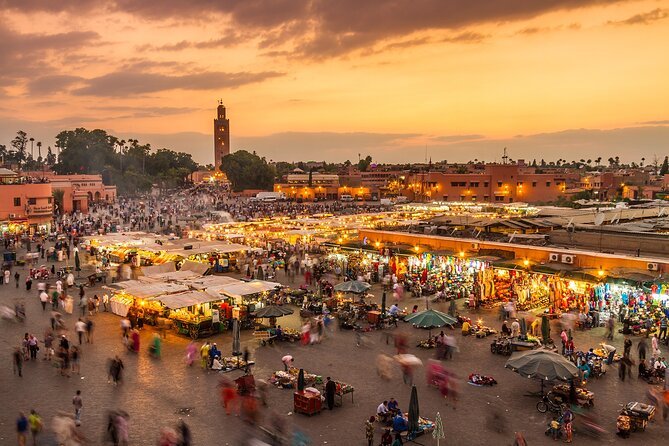
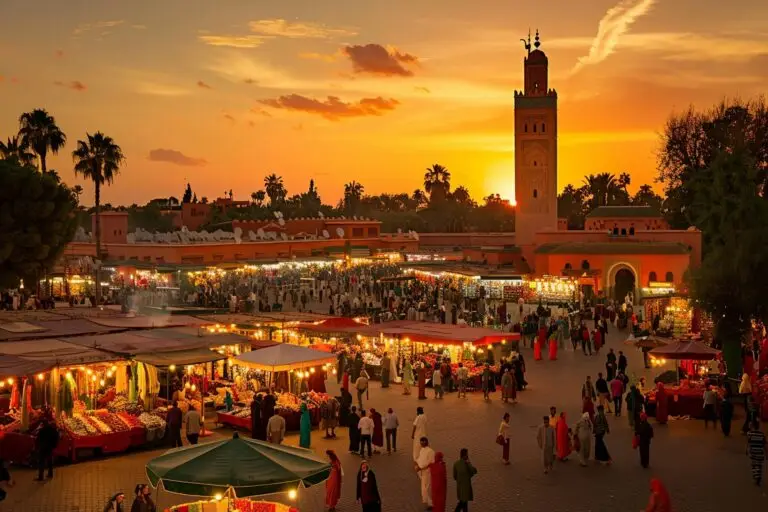
Morocco's most famous destination, famous for its labyrinthine medina, the energy of Jemaa el-Fnaa square, hidden palaces, and easy access to the Atlas Mountains and Sahara. Plan 2-3 days minimum.
Fes — The Cultural Capital
Home to the world's oldest university (859 AD) and the largest medieval medina on Earth. Less touristy than Marrakech, more authentic. Best with a local guide for the first day.
Chefchaouen — The Blue Pearl
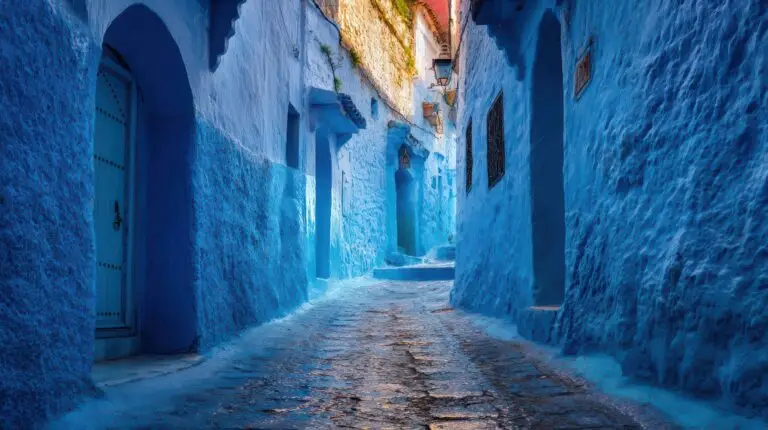
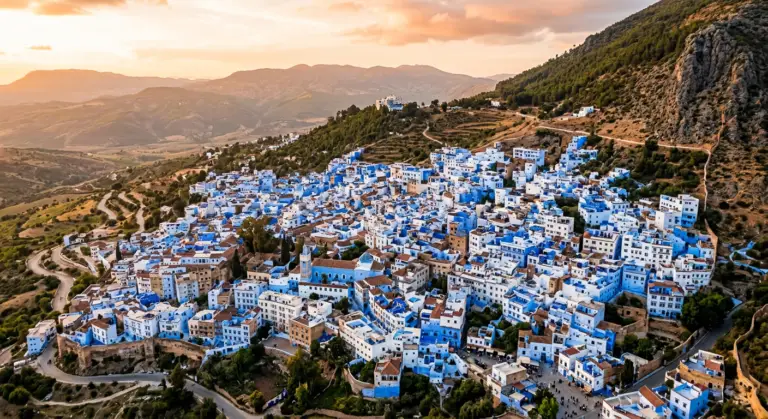
The famous all-blue mountain town in northern Morocco. Smaller, calmer and incredibly photogenic. Best as a 1-2 day stop on a longer northern route.
Essaouira — Coastal Escape
A laid-back fortified port city on the Atlantic with white-and-blue buildings, fresh seafood, and constant cool breezes. Perfect for a 2-day break from the intensity of inland cities.
Merzouga — Sahara Desert
Where you'll experience the iconic Erg Chebbi dunes — the Morocco of postcards. Camel rides, overnight Berber camps, sunrise over the dunes. The highlight of most Morocco trips.
Getting to Morocco — Flights & Airports
Morocco has 4 main international airports. Choose based on your itinerary:
- Marrakech Menara (RAK) — Best for tourists, direct flights from Europe and major US cities
- Casablanca Mohammed V (CMN) — Largest hub, best for long-haul flights
- Fes-Saïs (FEZ) — Direct flights from Paris, London, Madrid, Brussels
- Tangier Ibn Battouta (TNG) — Best gateway to Northern Morocco and Chefchaouen
Booking your flights 6-8 weeks in advance gives you the best prices. Use our flight search tool below to compare 700+ airlines instantly:
We may earn a commission when you book through our partners — at no extra cost to you.
How to Get Around Morocco
Morocco has surprisingly good infrastructure for getting around. Here are your main options:
Trains (Best for inter-city travel)
The Al Boraq high-speed train connects Casablanca to Tangier in just 2 hours — Africa's first high-speed rail. ONCF trains also connect Fes, Meknes, Rabat and Marrakech reliably and comfortably. Book a day in advance for first class (very affordable).
Buses (CTM and Supratours)
For destinations not served by trains (Chefchaouen, Essaouira, Merzouga), CTM and Supratours run comfortable air-conditioned buses. Always book online in advance.
Grand Taxis (Shared inter-city)
Shared sedan taxis between cities — cheap but cramped (6 passengers in a Mercedes). Useful for short hops where buses don't run.
Petit Taxis (City transport)
Small color-coded taxis for in-city rides. Always insist on the meter (compteur) or agree on the price before getting in.
Private driver
For first-time visitors doing a multi-city trip with desert excursions, hiring a private driver is by far the most comfortable option. Expect to pay $80-120 per day for car + driver.
Where to Stay in Morocco — Riads, Hotels & Beyond
Your accommodation choice will define your Morocco experience. Here are your main options:
Riads (Highly recommended)
A riad is a traditional Moroccan house built around an inner courtyard, often converted into a boutique hotel. Staying in a riad is a quintessential Moroccan experience — most are inside the medina, full of character, and offer authentic breakfasts. Book at least 1-2 riads on your trip.
Modern hotels
Available in the new city districts (Gueliz in Marrakech, Hivernage). More resort-like with pools and spas, less authentic but very comfortable. Good option for families.
Desert camps
For your Sahara night, you'll stay in a Berber camp at the foot of the dunes. Range from basic tents to luxury setups with real beds and hot showers. Standard camps cost $50-80/person, luxury $150-300/person all-inclusive.
Morocco Trip Cost: How Much Should You Budget?
Morocco offers excellent value compared to Europe. Here's what to budget per person per day:
| Travel Style | Daily Budget | What You Get |
|---|---|---|
| Backpacker | $40-60 | Hostels, street food, public transport |
| Mid-range | $80-150 | Boutique riads, mix of restaurants, private taxis |
| Luxury | $250-500+ | 5-star riads, fine dining, private guides, luxury camps |
For a comfortable 10-day Morocco trip including flights from Europe, expect to spend around $1,500-2,500 per person. From the US, add $500-800 for flights.
What to Pack for Morocco
Pack for cultural appropriateness and weather variation. Here's the essentials:
- Modest clothing — Cover shoulders and knees in cities and religious sites
- Layers — Days are warm, evenings (especially desert) get cold
- Comfortable walking shoes — Medinas have uneven cobblestones
- Light scarf or pashmina — Useful for women in mosques and dust protection
- Sunscreen & sunglasses — Sun is intense year-round
- Power adapter — Morocco uses European Type C and E plugs
- Stomach medicine — Just in case (Imodium, electrolytes)
- Cash in small bills — Many places don't accept cards
- Reusable water bottle — Don't drink tap water, but you can refill at hotels
Moroccan Culture & Etiquette: What to Know
Morocco is a Muslim-majority country with a relaxed but traditional culture. Following these basic rules will make your trip much smoother:
Dress code
Cover shoulders and knees in cities. Women don't need to cover their hair (except in some religious sites). On beaches, normal swimwear is fine. Save tight or revealing clothing for resorts and beaches.
Photography
Always ask before photographing people, especially women. Many will ask for a few dirhams in exchange. Never photograph government buildings or police. Drones require special permission.
Religion & Ramadan
Five daily calls to prayer — fascinating to experience. Non-Muslims can't enter most mosques (Hassan II in Casablanca being a famous exception). During Ramadan, eat and drink discreetly during the day.
Haggling
Haggling is expected in souks (not in shops with fixed prices). Counter at 30-50% of the first price. Stay friendly — it's part of the experience.
Is Morocco Safe for First-Time Tourists?
Yes, Morocco is one of the safest countries in North Africa for tourists. Violent crime against tourists is rare, and the country invests heavily in tourist safety. That said, common-sense precautions still apply:
- Pickpocketing exists in crowded medinas — use a money belt
- Solo female travelers may face attention but rarely harassment
- Avoid wandering medinas alone at night your first day
- Use only official taxis (red in Casablanca, beige in Marrakech)
- Be cautious of "fake guides" offering to help you find your riad
- Drink only bottled water (Sidi Ali, Ain Saiss are common brands)
Moroccan Food Guide for First Timers
Moroccan cuisine is one of the world's great culinary traditions. Don't leave without trying:
- Tagine — Slow-cooked stew in a conical clay pot. Try chicken & preserved lemon, lamb & prunes
- Couscous — Friday tradition. Steamed semolina with vegetables and meat
- Pastilla — Sweet-savory pie with chicken or pigeon, almonds and cinnamon
- Harira — Hearty soup with lentils and chickpeas, especially during Ramadan
- Mint tea — The national drink. Pour from height to create foam
- Msemen & baghrir — Traditional breakfast pancakes
- Fresh orange juice — Best in the world, especially at Jemaa el-Fnaa (ask without ice)
Money & Tipping in Morocco
The Moroccan Dirham (MAD) is a closed currency — you can't easily get it before arrival. Here's what to know:
- Get cash from ATMs at the airport upon arrival (better rates than exchange counters)
- Exchange rate: Approximately 1 USD = 10 MAD, 1 EUR = 11 MAD (varies)
- Always carry cash — Souks, taxis and small restaurants don't accept cards
- Tip 10% at restaurants if service isn't included
- Tip 10-20 MAD for hotel porters, drivers, helpful strangers
- Don't take large amounts of MAD home — exchange back at the airport before departure
Top 10 Insider Tips From a Local for First-Time Morocco Travelers
- Download Maps.me — Works offline in medinas where Google Maps fails
- Use Careem app — Local Uber alternative with fixed taxi prices
- Learn 5 Arabic words — "Shukran" (thanks), "La" (no), "Salam" (hello), "Bzaf" (too much), "Yallah" (let's go)
- Buy an eSIM — Airalo or similar saves money vs roaming. Coverage is excellent.
- Don't accept "free" guides — They always expect payment, often aggressively
- Eat where locals eat — Skip restaurants with hostess pulling you in
- Get lost in the medina once — Then take a guided walking tour to understand it
- Respect prayer times — Some shops close briefly 5 times a day
- Buy a small souvenir from each region — Saharawi rugs, Fes pottery, Essaouira wood
- Slow down — Mektoub (destiny). Things happen on Moroccan time, not yours
Frequently Asked Questions
Is Morocco safe for solo female travelers?
Yes, Morocco is generally safe for solo female travelers. You may receive verbal attention (catcalls, "Where are you from?") but serious incidents are rare. Dress modestly, walk with confidence, avoid empty streets at night, and join group tours for desert excursions. Many solo women travel through Morocco without issue every year.
What's the best 7-day Morocco itinerary for first timers?
The classic first-timer 7-day itinerary: 2 nights Marrakech, 1 night Atlas Mountains/Dades Valley, 1 night Sahara Desert (Merzouga), 1 night Skoura/Ouarzazate on the way back, 2 nights Marrakech. This combines cities, mountains and desert in one smooth loop.
Should I visit Marrakech or Fes first?
Most first-timers should start with Marrakech — it's easier to navigate, more tourist-friendly, and has better international flight connections. Add Fes if you have 7+ days. Fes is more authentic but the medina is more confusing.
Can I drink alcohol in Morocco?
Yes, but discreetly. Alcohol is sold in licensed restaurants, hotels, riads, and dedicated stores (Carrefour). It's not available in most local restaurants or in the street. Don't drink in public.
How much does a 10-day Morocco trip cost?
Budget: $800-1,200 per person. Mid-range: $1,500-2,500 per person. Luxury: $4,000+. Add international flights ($400-900 from Europe, $500-1,000 from US).
Do I need travel insurance for Morocco?
Yes — strongly recommended. Healthcare is decent in cities but limited in rural areas (Atlas, Sahara). Insurance also covers flight delays, cancellations, and theft. Budget $30-50 for a 2-week policy.
Can I use my credit card in Morocco?
In hotels, riads and upscale restaurants — yes. In souks, taxis, street food, small shops — no. Always carry enough cash. ATMs are available in all cities.
Ready to Start Planning Your Morocco Adventure?
Get a free, personalized Morocco itinerary from our local experts within 24 hours. No obligation, no pressure — just honest advice from people who love this country.
Get My Free Custom Quote →